
Cumberland Resident Record Coverage
Careful Cumberland name research uses the record built for the question at hand. Tax Administration connects a current listing to a parcel. The Register of Deeds connects parties to a recorded instrument. Voter Search can establish a public registration record and election context. eCourts finds public case material, while vital-record and library paths handle events and historical questions. Each result has a different date, keeper, and access rule. Start with the narrowest fit, then use another custodian to confirm time and place.
| Record layer | What it can confirm | Custodian or search | Access route |
|---|---|---|---|
| Tax listing | Listing name, situs, REID, PIN, values, and improvements. | Cumberland Tax Search | Public current-year search; prior-year work uses the abstract route. |
| Recorded instrument | Grantor, grantee, instrument type, recording date, legal description, and image. | Register of Deeds Internet Search | Public index and images; certified copies come from the office. |
| Voter record | Status, public address, districts, polling place, party, and voter history. | North Carolina Voter Search | Public lookup with statutory field and protected-address limits. |
| Court case | Party, case number, type, filing date, status, and public documents. | North Carolina eCourts Portal | Public, nonconfidential material; official copies come from the Clerk. |
| Vital event | Birth, death, marriage, divorce, or fetal-death information. | North Carolina Vital Records | Request and eligibility rules apply. |
| Historical household | Directory, yearbook, newspaper, map, or obituary lead. | Cumberland Library and DigitalNC | Scans, shelves, microfilm, and focused research help. |
A current tax listing is not the same as a current occupant, and a court party is not proof of a Cumberland address. The strongest match has at least two dated records that agree on the person, place, and period.
Anchor a Cumberland Records Search
When the only starting point is a name, the Cumberland voter-registration search route can lead to the statewide Voter Search. The public form accepts first name, optional middle initial, last name, optional year of birth, county, and voter-status choices. Use Cumberland County and a birth-year clue when those details are known. A result can show public registration information such as status, address, districts, polling place, party, and voter history.
That public record has firm limits. Date of birth, driver-license number, and Social Security information are not part of the public electronic list. A protected address can be absent, and an inactive or removed status is a snapshot of the election file rather than a lasting identity label. Record the search date and chosen status before comparing the hit with a deed, parcel, or court result. Note: A voter result can anchor a time and county, but it cannot prove every personal fact about a same-name person.
Search Cumberland Court Records
North Carolina eCourts Smart Search is the documented court route for Cumberland Superior and District Courts in District 14. A party-name search is a lead, not proof of identity. Narrow it with Cumberland County, filing dates, case type, status, or date of birth when available. The court training materials also document wildcards: a last name needs at least three characters followed by an asterisk, while a first name needs at least one. A case or business search uses at least four characters followed by an asterisk.
| eCourts search surface | Useful field | Format or filter note |
|---|---|---|
| Smart Search | Location and party name | Select Cumberland County to reduce same-name matches. |
| Smart Search | Date of birth, case type, status | Optional filters that require a later identity check. |
| Smart Search | Filing-date range | Use two dates to narrow a broad party search. |
| Search Hearings | Case number, party, or business name | Separate hearing-search path. |
| Search Hearings | Attorney, bar number, judicial officer, courtroom | Optional filters for a scheduled hearing. |
| Judgment Search | Party name or case number | Separate judgment-search interface. |
The North Carolina eCourts overview explains the statewide system and its public resources.
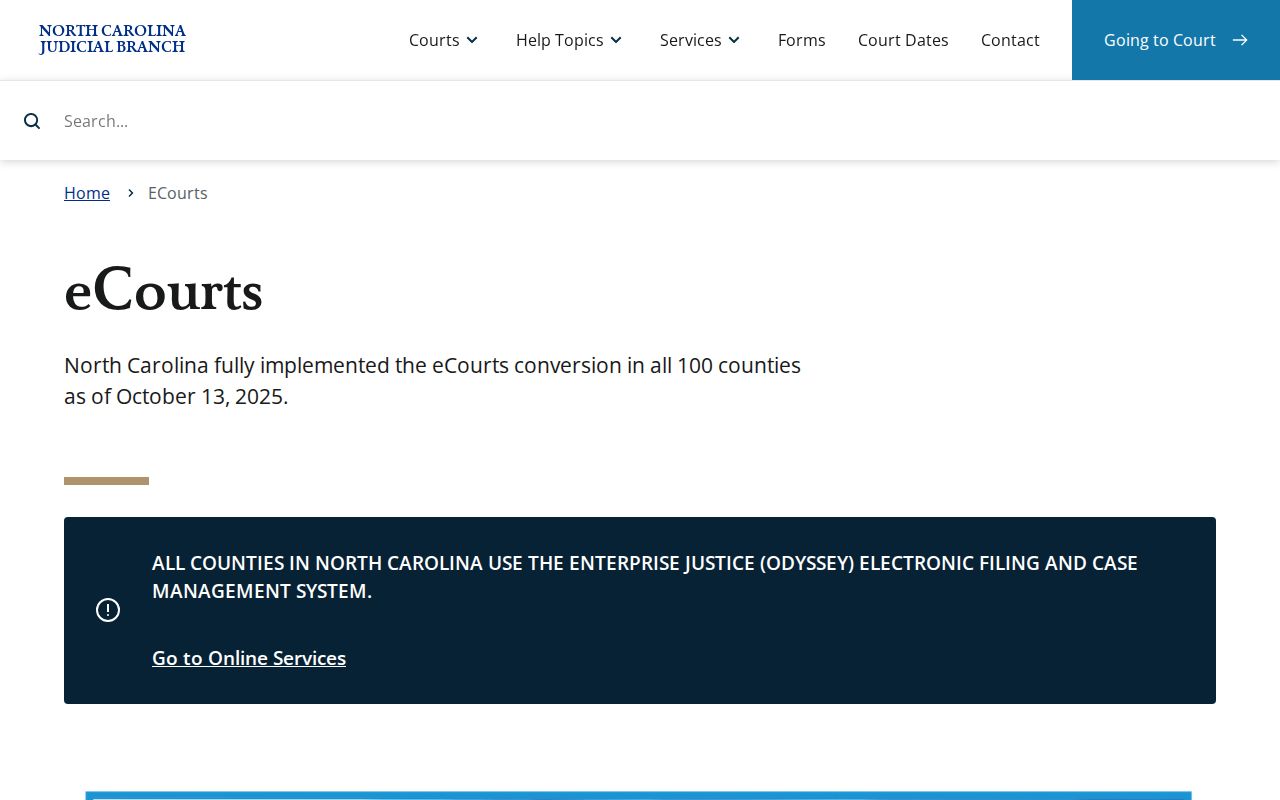
Use the statewide interface for discovery, then retain the local county, case number, party spelling, filing date, and status for a Clerk inquiry if an official copy is needed.
Read Cumberland Court Records
Read a court result by role and record type. The documented result inventory includes a case number, disposition status, index date and time, parties, judgment comments where available, and a Smart Search case summary with documents when the particular public record is available. A disposition is the recorded procedural status or outcome. It does not tell the whole story of every allegation. A party may be a plaintiff, defendant, petitioner, respondent, creditor, heir, or another role.
The eCourts training and resources page documents Smart Search behavior and filters.
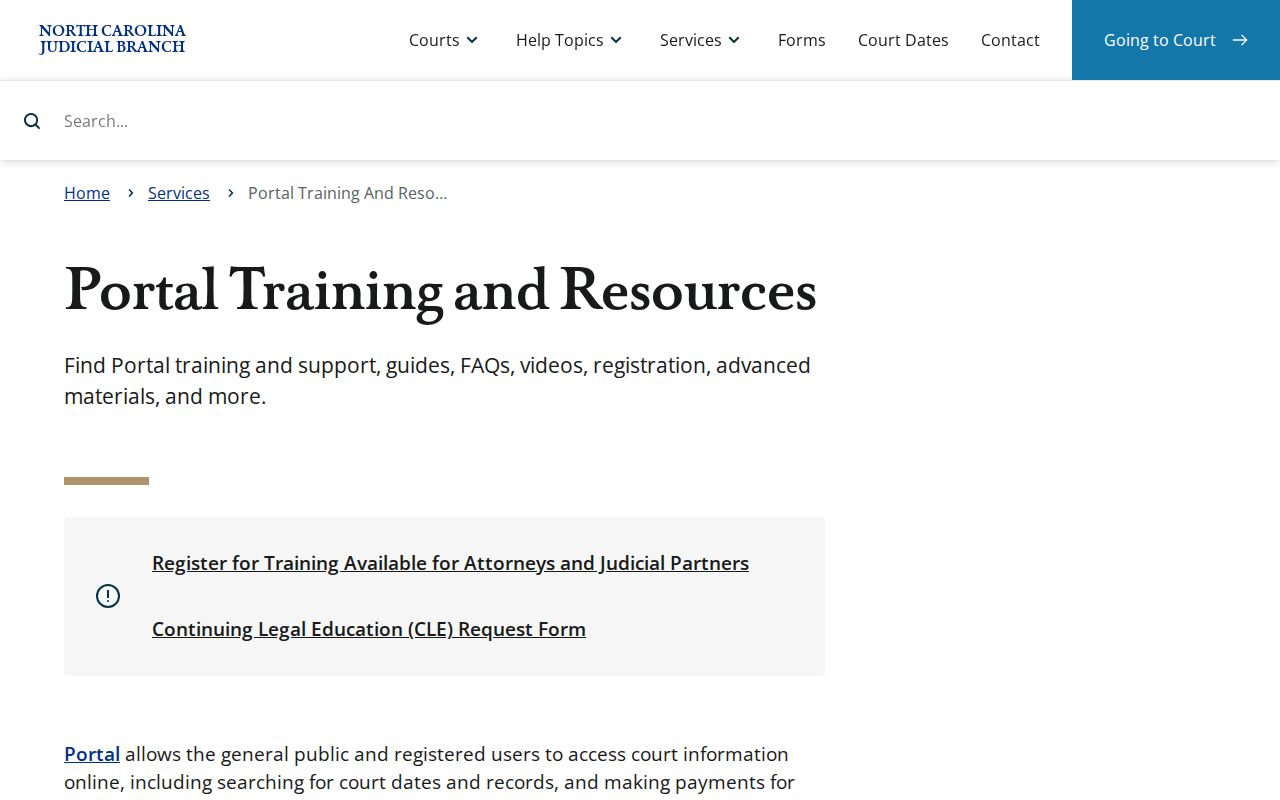
Training guidance helps separate a name match from a result that can be checked with an address, record date, or another official index.
The eCourts Portal itself is the public search entry point for nonconfidential material.
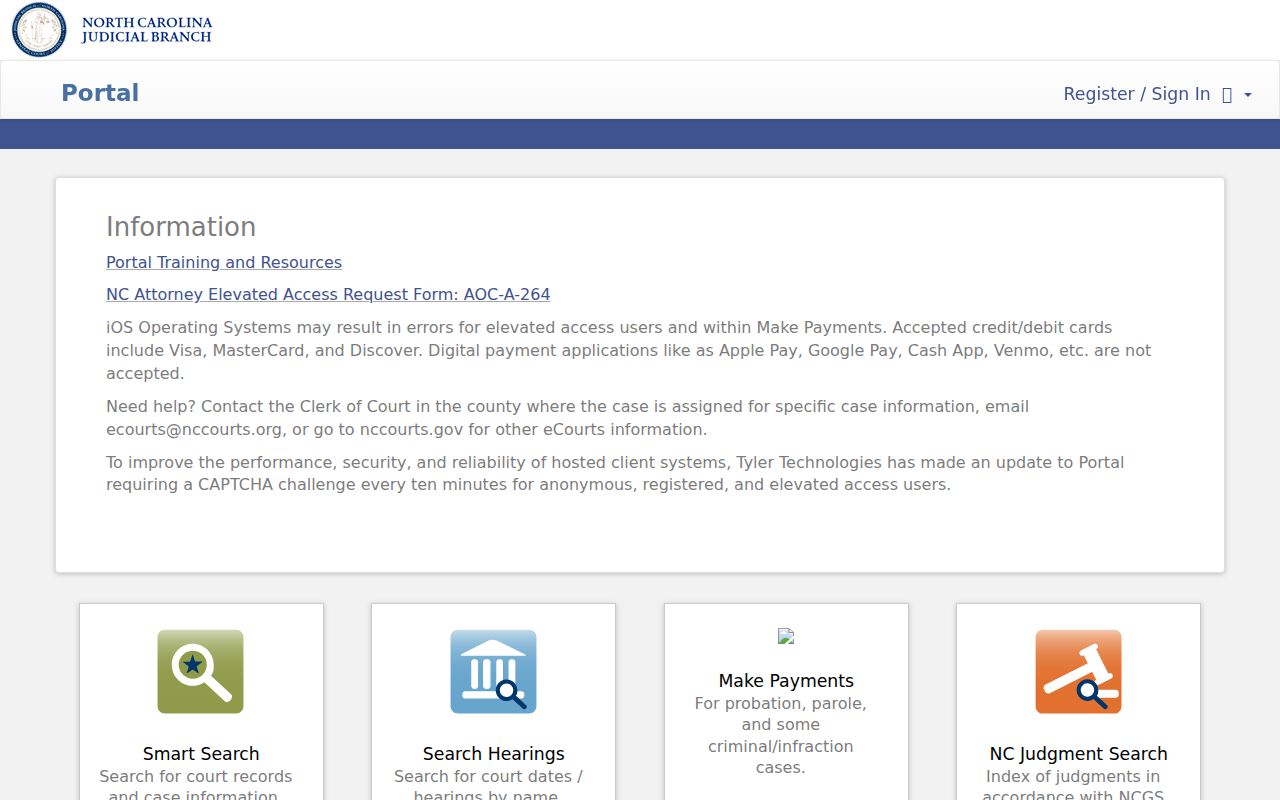
Sealed, restricted, juvenile, protective-order, and other protected material can be unavailable online. The Cumberland Clerk and courthouse eCourts kiosks are the fallback for an official copy, a withheld document, or an older record question.
Verify Cumberland Resident Records
A name check becomes stronger when it moves from a name to a dated address or instrument, then to a separate keeper. If an address is known, use Tax Administration’s location search for the REID or PIN. If a name is known, a voter record or recorded-instrument index can be the first route. The Register of Deeds index reaches land records back to 1754 according to the office, but an index line is still a finding aid. Open the image when available and compare the legal description, parties, and recording date.
- Write down the exact spelling, possible middle initial, Cumberland town, address or date range, and lawful purpose before searching.
- Use Tax Administration or Voter Search to anchor the name to a place and time, then save the parcel identifier or public result details.
- Search the Register of Deeds by grantor or grantee, or eCourts by party, and compare county, dates, and role.
- Read the document image or court summary where public, rather than relying on an index label alone.
- Stop when key facts conflict. A protected address, name change, or record gap can explain a non-match.
- Docket
- The court’s case record and entries, identified by a case number.
- Index and image
- An index points to a record. An image is the scanned page or instrument itself.
- Certified copy
- A custodian-issued copy with certification, available only through the applicable office and rules.
- Same-name collision
- Two or more people share a name while their dates, places, or relationships differ.
Test Cumberland Resident Records
Same-name results are common enough to require a deliberate check. Save the middle initial, approximate age or birth-year clue, county, address, parcel identifier, case number, and directory year that appear in each source. Then compare a second custodian that holds a different type of record. A tax listing can be tested against a recorded deed. A voter address can be compared with a parcel situs. A directory household can be compared with a dated obituary or historical instrument.
Do not force a match when the dates or places diverge. A court result may identify a party without establishing residence. A tax owner can differ from an occupant. A historical city directory records the printed year, not a current condition. The Cumberland City Directory is the better route when the task is to test an older household through its published years.
Cumberland Family Research Records
For an heir or family-line question, use the Clerk’s estate records, Register of Deeds, library obituary and newspaper resources, and the State Archives. For a former classmate, library yearbooks and historical city directories can be more useful than current county rolls. The library asks for a date of death or another narrow date clue for newspaper work because its papers are not indexed for a name-only search. A town, church, school, or funeral home can make a request more precise.
Vital questions require the proper route. North Carolina statewide coverage begins with births in 1913, deaths in 1930, marriages in 1962, divorces in 1958, and fetal deaths in 2001. Cumberland births, deaths, and marriages may also involve the Register of Deeds where the event occurred, while a Cumberland divorce case belongs with the Clerk. Pre-coverage questions can require the county office or State Archives instead of a modern order page.
The North Carolina Vital Records research guidance directs researchers to historical pathways.
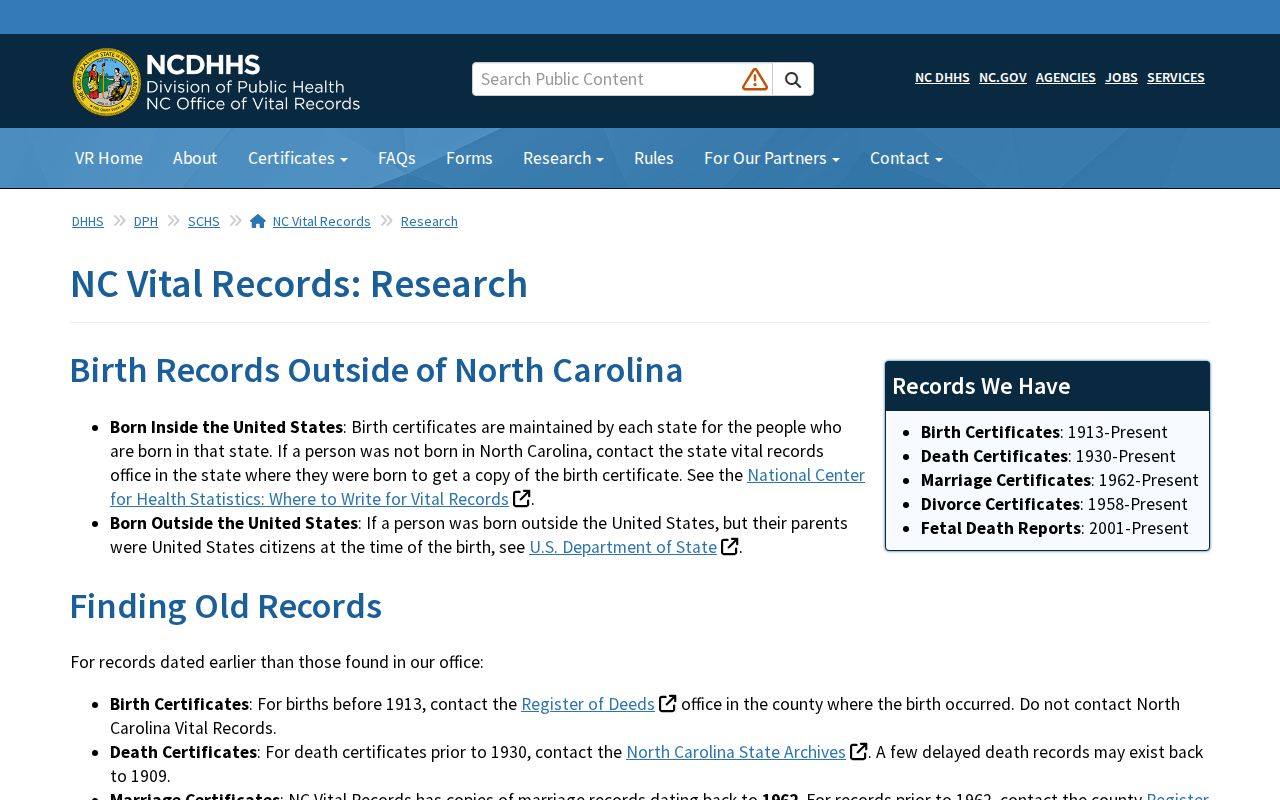
A research lead can establish where to ask next, but it does not remove the statutory limits on a certificate or certified copy.
Cumberland Vital-Record Requests
North Carolina vital records are not a free public name-search system. The state order page lists request information, delivery choices, and the routes for record types. For a birth request, the state lists the child’s name, parents’ names, date, city and county, relationship, identity, and delivery details. Death, marriage, divorce, and fetal-death requests likewise need event and relationship information. The exact certificate type, record age, and requester relationship matter.
The state lists a $24 search fee with one copy for a three-year search, $15 additional copies, and a $13.95 processing fee for online or telephone orders. Regular USPS delivery is free, overnight delivery is listed at $20, and an in-person expedited option is listed at an added $15 by appointment. A mailed request uses the state address and permitted payment forms on the order page. Ask the Cumberland Register of Deeds or Clerk when the county is the correct custodian.
The state order page is shown in this source image.
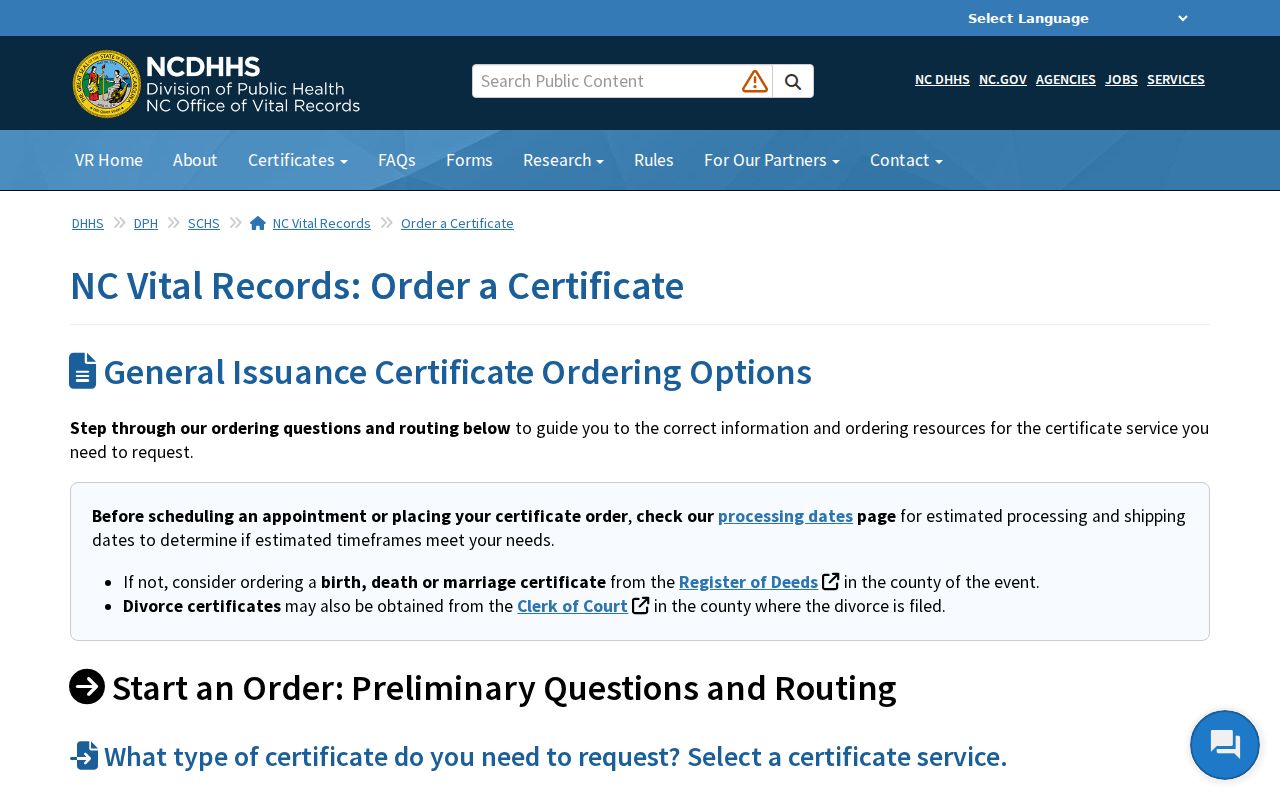
Use the live state instructions for current processing information and request controls, which can change after the capture date.
N.C. Gen. Stat. § 130A-93 governs birth-record access and certified-copy eligibility. It distinguishes an uncertified copy or abstract from a certified copy and retains exceptions for sensitive records.
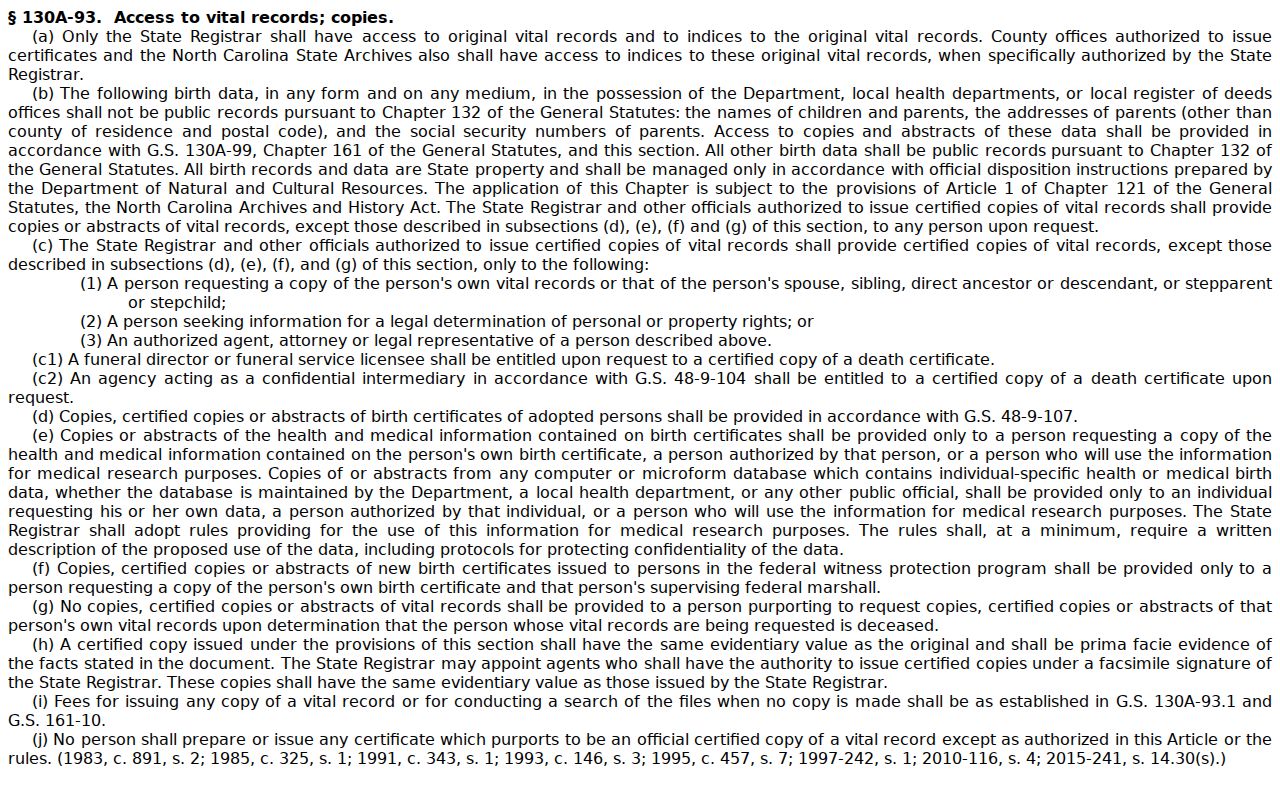
The statute is a reason to state the specific record and requester relationship to the custodian, not to assume every certificate has one simple access rule.
Cumberland Records-Request Fallbacks
When the online result does not answer the question, shift to the custodian rather than searching more broadly. The Cumberland court page lists eCourts kiosks and the Clerk’s main number, 910-475-3000. The Register of Deeds supplies online index access, counter service, and mail copies. Tax Administration can explain current and prior-year parcel routes. The library can retrieve books or microfilm for a focused historical question, and the State Archives catalog is a route for material outside modern county systems.
The Cumberland County public-records request portal is the county fallback for a specific unindexed record. Give the office a record type, date span, address or parcel, and a precise description. Fayetteville municipal material uses the city request route. A focused request can seek a defined permit, meeting packet, cemetery deed, or incident record without asking an office to create a resident list.
Cumberland Lookup Limits
North Carolina limits records by type. Voter files withhold date of birth, driver-license numbers, and Social Security information from public electronic lists. Vital records have certificate and sensitive-information limits. The North Carolina Address Confidentiality Program gives eligible survivors a substitute address for public-facing transactions, while real-property ownership information can remain in another system. A missing field should stay missing. Do not try to reconstruct a protected address from indirect records.
Lawful use. Use public records for a narrow, lawful purpose and stop when that purpose is met. Do not use records to stalk, harass, intimidate, or harm anyone.
North Carolina’s stalking statute, N.C. Gen. Stat. § 14-277.3A, addresses a course of conduct without legal purpose that causes fear or substantial emotional distress. Keep results private, preserve source dates, and let the original custodian correct any error.
eCourts Changes to Cumberland Records
North Carolina completed its eCourts rollout in all 100 counties by October 13, 2025. Cumberland’s court location page identifies public kiosk availability, and the statewide Portal is now the normal discovery route for a public Cumberland case. The change improves access to a search interface. It does not turn a public result into the official court record, open confidential files, or create a digitized image for every older case.
Keep an older case number and spelling when the online result is incomplete. The Clerk, courthouse kiosk, and archival channels remain part of a full Cumberland record trail when a document is restricted, too large to download, absent from the visible result, or historical.