
Finding Cumberland Residents
Cumberland County does not publish one roster of every household. The right route changes with the question. A current address belongs first in the county tax search and parcel layer. A person who may be a registered voter belongs in the state voter lookup. A past household may appear in a Hill directory, library newspaper, or map. A land connection belongs in the Register of Deeds index. These records are useful precisely because they answer different questions.
Keep a short log with the office, URL or contact route, search date, record date, and the fact supported. A tax listing is not automatically proof of occupancy. A voter result is not proof of ownership. A directory entry is evidence for its printed year, not for every later year. The best Cumberland residents directory search moves from a lead to a confirming record instead of collecting loose name matches.
- Search the current property listing by owner or address and note the REID, PIN, and situs address.
- Use the North Carolina voter lookup with the Cumberland filter and available name details.
- Search the Register of Deeds index for a deed, plat, lien, or other instrument.
- Compare a historical household with the directory year, street guide, maps, and census neighborhood.
- Use the office, library, Archives, or records-request channel when the needed material is not online.
Cumberland Resident Records Offices
Cumberland’s core trail passes through the Register of Deeds, Tax Administration, Board of Elections, Clerk of Superior Court, and Headquarters Library. The Register records land instruments and provides authorized vital-record functions. Tax Administration maintains the current property listing and tax data. Elections maintains registration records within statutory limits. The Clerk holds court, estate, and special-proceeding material. The library carries the directories, maps, newspapers, census resources, and local-history collections that fill gaps left by modern portals.
Cumberland Register of Deeds
117 Dick Street
Fayetteville, NC 28301
Land Records: 910-678-7773
Cumberland Tax Administration
Room 530, 117 Dick Street
Fayetteville, NC 28301
910-678-7507
Cumberland Board of Elections
227 Fountainhead Lane
Fayetteville, NC 28301
910-678-7733
Headquarters Library
300 Maiden Lane
Fayetteville, NC 28301
910-483-7727 ext. 1365
The Cumberland street directory takes the address route farther. The custodian remains the better choice whenever an online record is an index only or a certified copy is required.
Cumberland Tax Search by Address
Cumberland County Tax Administration Real Estate Search offers owner or business-name, address, REID, and PIN routes. Its online display is current-year parcel information. Prior-year values and billing use an abstract lookup with a bill number, parcel number, owner, or street clue. In address mode, the county says to leave out street types and direction words. A result gives a listing lead that can then be checked against a recorded instrument.
| Search route | Information used | County instruction |
|---|---|---|
| Owner or business | Last name, first name, or business name | Use the displayed search format. |
| Location address | Street number and street name | Street name is required; omit Rd, Dr, and directions. |
| REID | Numeric real-estate identifier | Required in REID mode. |
| PIN | Parcel identification number | The portal requires at least ten digits. |
The county property search is the source shown here.
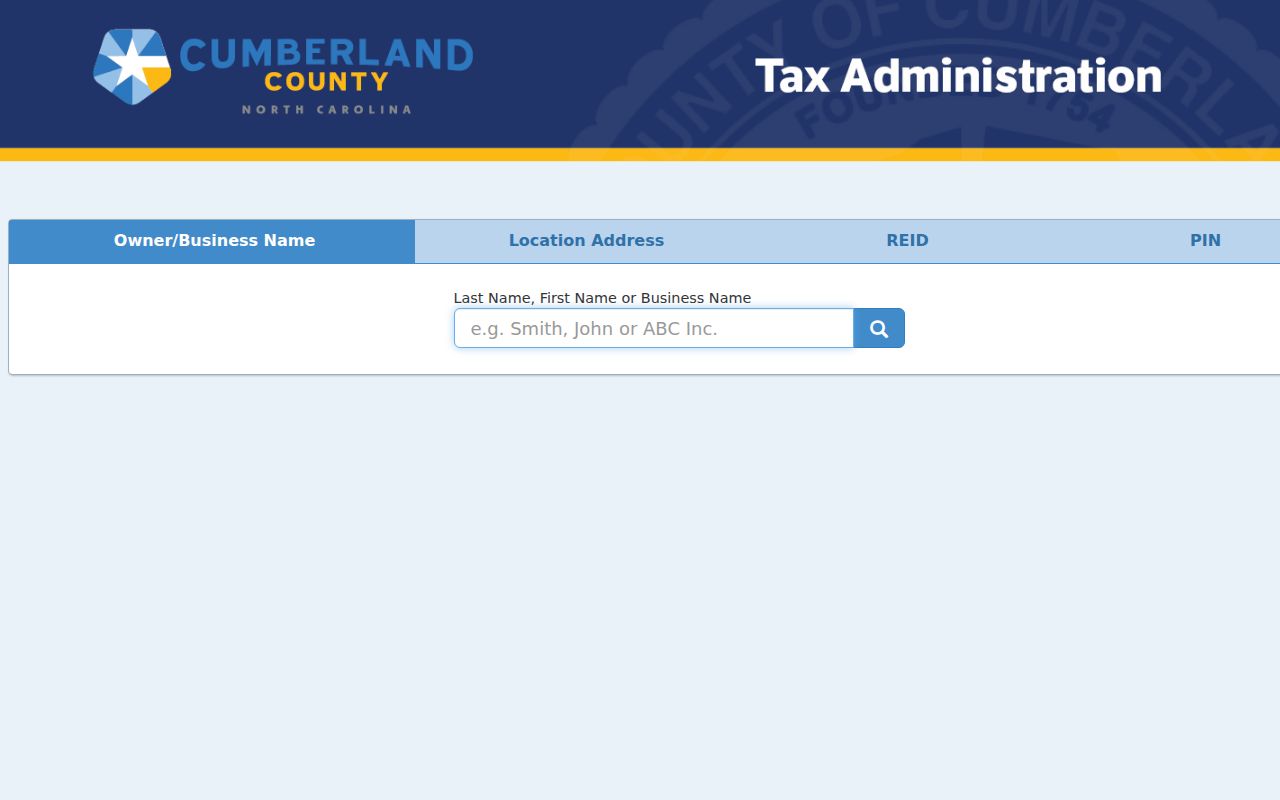
A parcel listing can start a Cumberland residents directory search, but it does not establish that a listed owner lives at the situs address.
Cumberland Deed Index Connections
The Cumberland Register of Deeds Internet Search is the main bridge from a party name to a recorded land instrument. The office says online records search back to 1754, although scanned books and image availability can vary. Use the tax owner, situs, parcel, subdivision, or plat clue to guide a grantor and grantee search. Then save the document type, recording date, book and page or instrument number, legal description, and image location.
An index is a finding aid. The image is the recorded instrument. A certified copy is an office-issued copy, not just a downloaded PDF. The Register of Deeds FAQ lists 25 cents per page for an uncertified copy, $5 for a first certified page, and $2 for each additional certified page. Copies can be requested online where available, by mail, or at the office. The Register does not conduct title searches, so a self-built chain must not be presented as a legal title opinion.
The Register of Deeds index is pictured below.
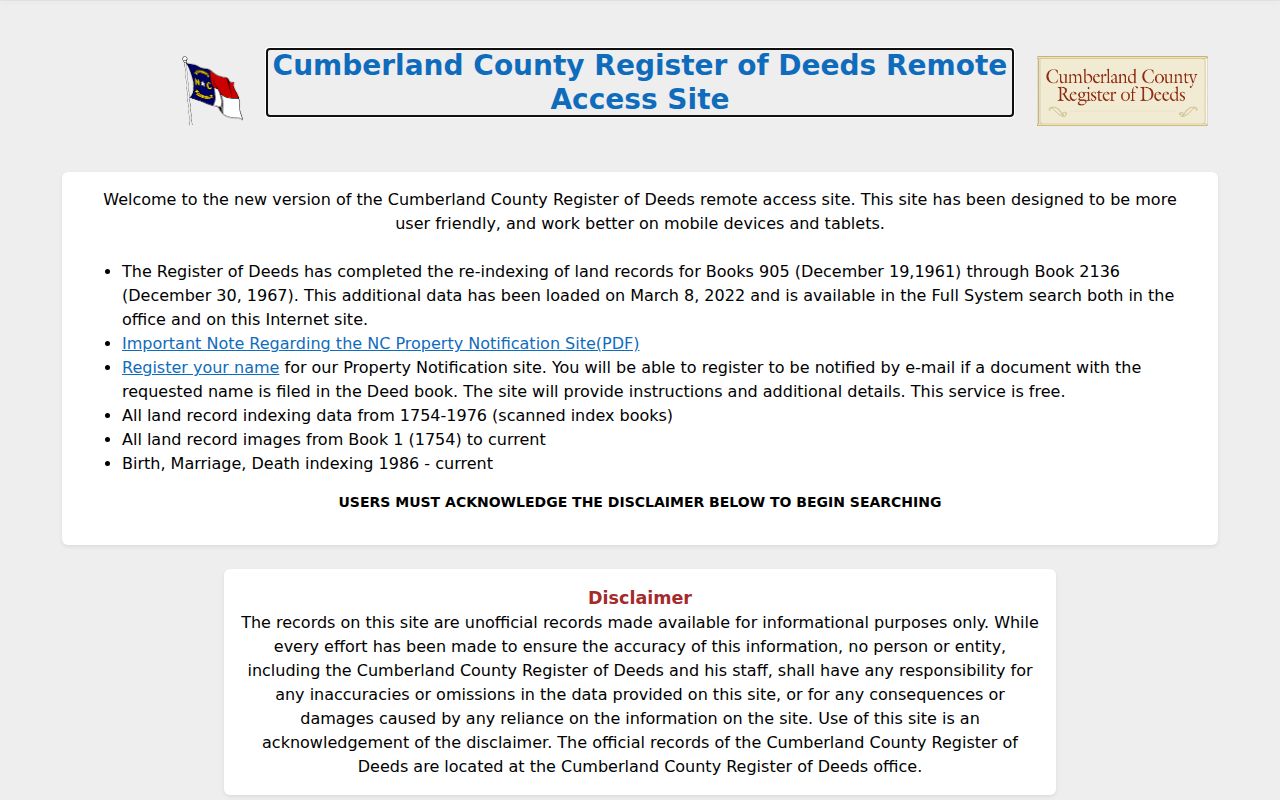
Party role and recording date help separate an old land connection from a current Cumberland household claim.
Cumberland Voter Record Boundaries
North Carolina Voter Search can be limited to Cumberland County. The public result can show a voter name, county registration number, status, address, districts, polling place, party, race, ethnicity, gender, and voter history within the statutory rules. It is a name search, not a reverse-address map. Preserve the county filter, voter status selection, and date of the search because election data changes.
N.C. Gen. Stat. § 163-82.10 allows a selective voter-list request through the county board, subject to actual production cost and field limits. Date of birth, driver-license information, Social Security information, and copied or traced signatures are not public electronic-list fields. Address Confidentiality Program and protective-order rules can also limit ordinary disclosure. Respect an unavailable address instead of trying to rebuild it from other sources.
The Cumberland Sheriff active inmate lookup is shown here.
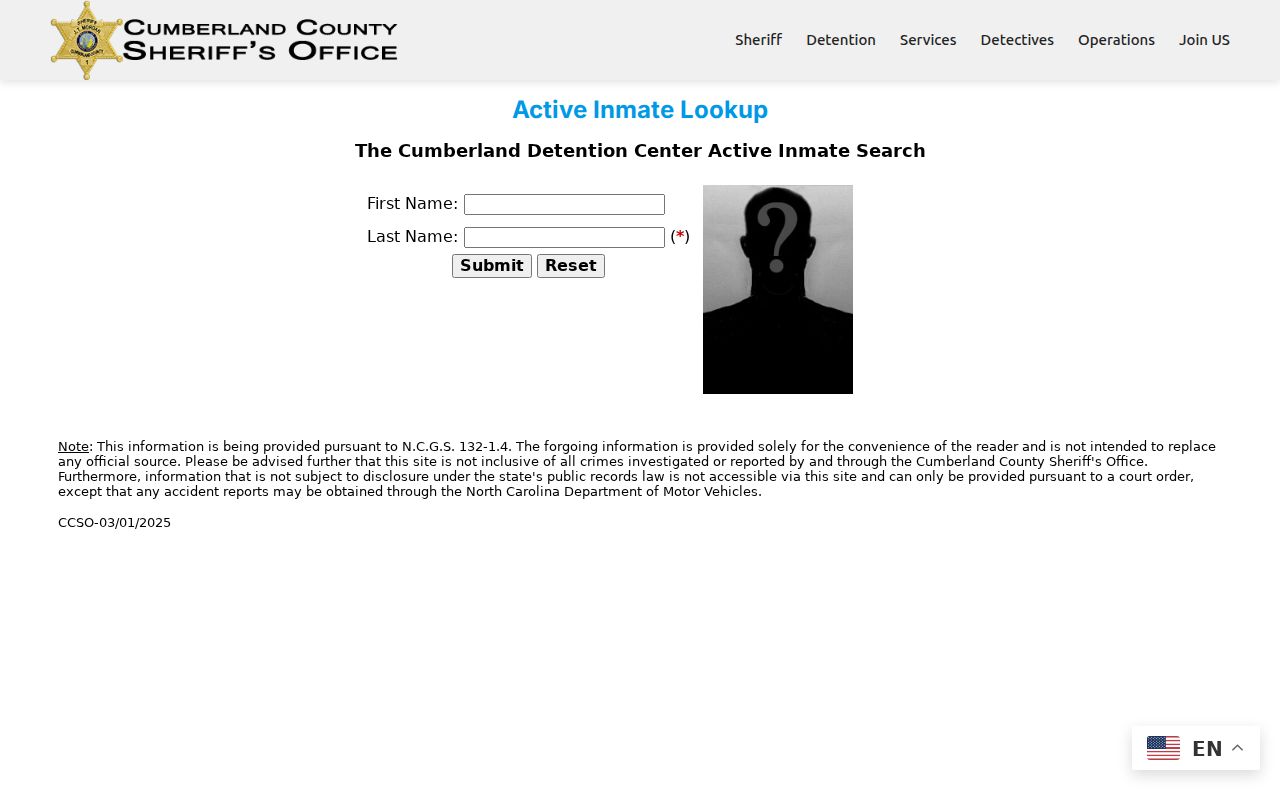
The Sheriff’s current-custody service is distinct from voter and property records, and it is not a historical resident directory.
Cumberland Current Directory Sources
Official systems act as partial Cumberland resident directories only when used for the fact they actually record. A tax card can locate a listing name and parcel. A deed index can locate parties to an instrument. A voter result can confirm a registration record. A court case can show a party’s procedural role. No one of those systems is a complete list of household members or a guarantee of a current address.
| Record layer | What it can show | Custodian | Access channel |
|---|---|---|---|
| Current parcel listing | Listing name, situs, REID, PIN, tax information | Tax Administration | Portal, office, abstract route |
| Land-index entry | Parties, instrument, date, legal-description clues | Register of Deeds | Index, image, mail, counter |
| Voter record | Statutorily public registration fields | Board of Elections | State lookup or focused county request |
| Court or estate record | Party role, case number, dates, status | Clerk of Superior Court | eCourts, kiosk, Clerk |
| Printed directory | Historic address and household clues | Headquarters Library | Library, DigitalNC, microfilm |
These layered Cumberland sources are more useful when the exact question stays narrow: a parcel, a directory year, a court number, or a voter registration record.
Cumberland Court and Vital Records
The North Carolina eCourts Portal serves Cumberland Superior and District Courts. Smart Search can use location, party name, date of birth, case type, status, and a filing-date range. A public result can give a case number, parties, status, index date, and available documents. It is not the official court record. Cumberland’s Clerk, 910-475-3000, is the route for a certified copy or a file the portal does not show.
North Carolina Vital Records uses a different custody and eligibility system. State coverage begins with births in 1913, deaths in 1930, marriages in 1962, and divorces in 1958. Earlier research may belong with the Cumberland Register of Deeds, Clerk, State Archives, or library. A certified certificate requires the correct record type, date, place, relationship, and statutory eligibility.
Cumberland Courts supplies local court and kiosk information.
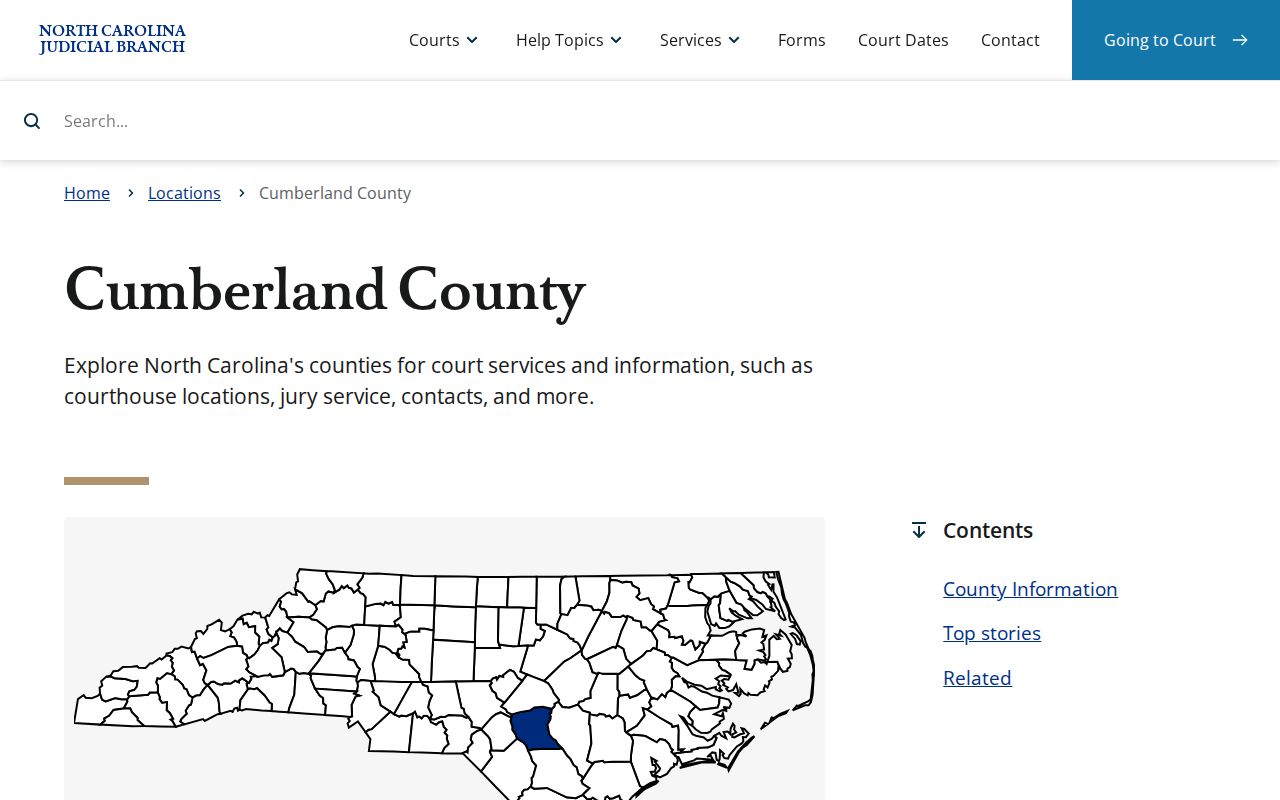
A court party result should be verified with the case number, date, role, and a second Cumberland record.
The state vital-records route is shown here.
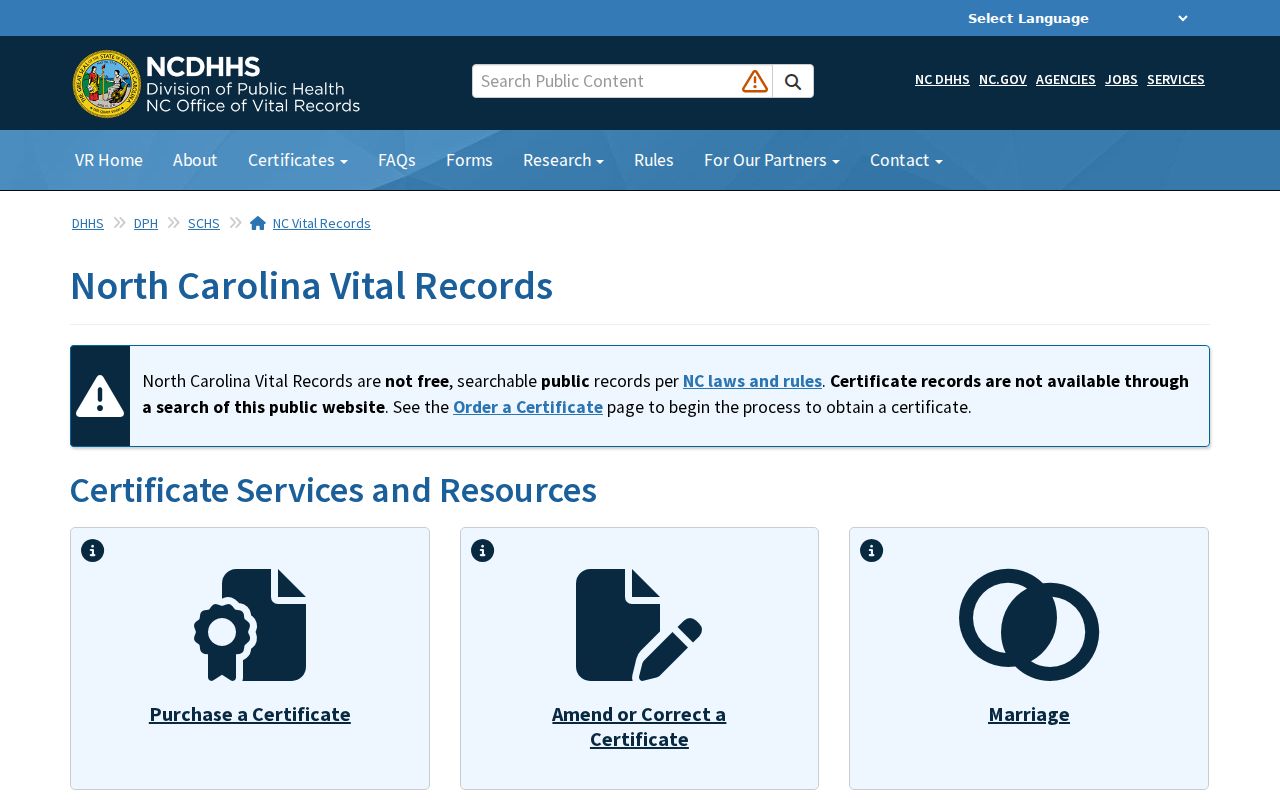
Vital-record access does not turn every certificate into a free online name search.
Cumberland Historical Directory Shelf
The Headquarters Library’s local-history collection holds city directories, yearbooks, maps, pamphlets, newspapers, census material, vital indexes, and photographs. Staff can retrieve a book or microfilm reel and help with a focused question, but the library does not undertake broad family-research projects. Newspaper lookups need a death date or similar time marker because the papers are not indexed by name alone. The local-history floor is the important offline route when the web index stops.
DigitalNC provides catalog records and scans for Fayetteville volumes from 1909-1910, 1915-1916, 1924, 1937, 1959, and 1960. The 1959 book includes an alphabetical list, householder and street guide, and telephone section. The Cumberland city directory gives the collection-by-collection historical method, including how to read a street-guide entry.
The Cumberland County history source provides the local place-name context shown below.
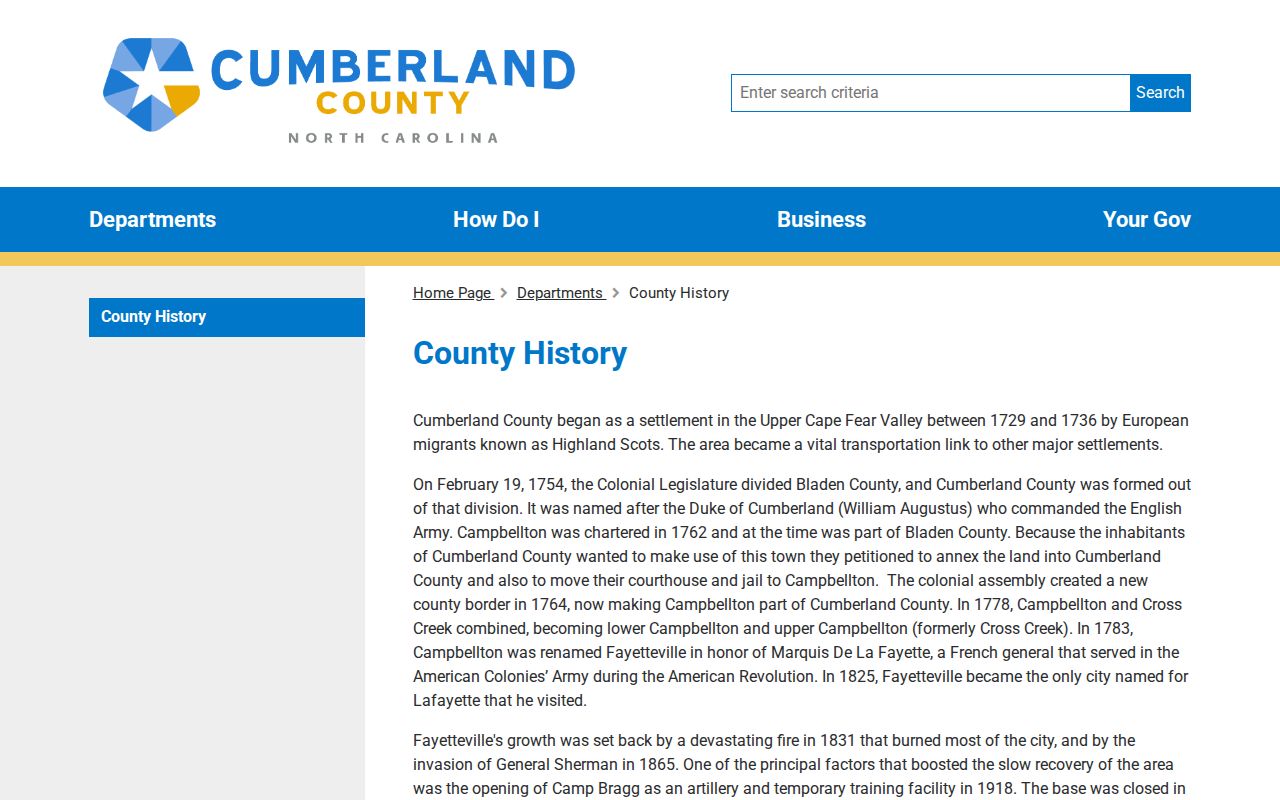
Older labels such as Cross Creek, Campbellton, and Fayetteville can all appear in the Cumberland historical trail.
Cumberland Record Words Explained
County sources use their own shorthand. Reading the label correctly helps prevent a tax record, a deed entry, and a directory listing from being treated as identical proof.
- Parcel
- A defined piece of real estate in the county tax and GIS systems.
- REID
- The real-estate identifier used by Cumberland Tax Administration.
- Index
- A search aid that points to a record or image.
- Criss-cross directory
- A street-order volume that moves from an address to a householder.
- Situs address
- The physical parcel location, which may differ from its tax mailing address.
Cumberland’s 1754 Records Story
Cumberland County formed from Bladen County in 1754. An early record may use Choeffington, Cross Creek, Campbellton, Fayetteville, or a rural place description instead of a modern label. Fayetteville’s 1831 fire also means survival can vary by office, record series, and volume. A missing online hit should lead to an older index, a library microfilm reel, the State Archives catalog, or an office-held volume, not to a conclusion that an event never happened.
Cumberland County history gives the local chronology. Retain the location wording used by the source, then add a separate modern label when comparing Cumberland records.
Cumberland Public-Safety Results
The Cumberland Sheriff active inmate lookup concerns current custody. It is not a complete list of residents or a historical record of every arrest. State custody information follows a different route through the Department of Adult Correction, which distinguishes prison, probation, parole, and historical information from county-jail material. A registry is another limited system with its own statutory fields and protected information.
North Carolina’s criminal-offender search is illustrated below.
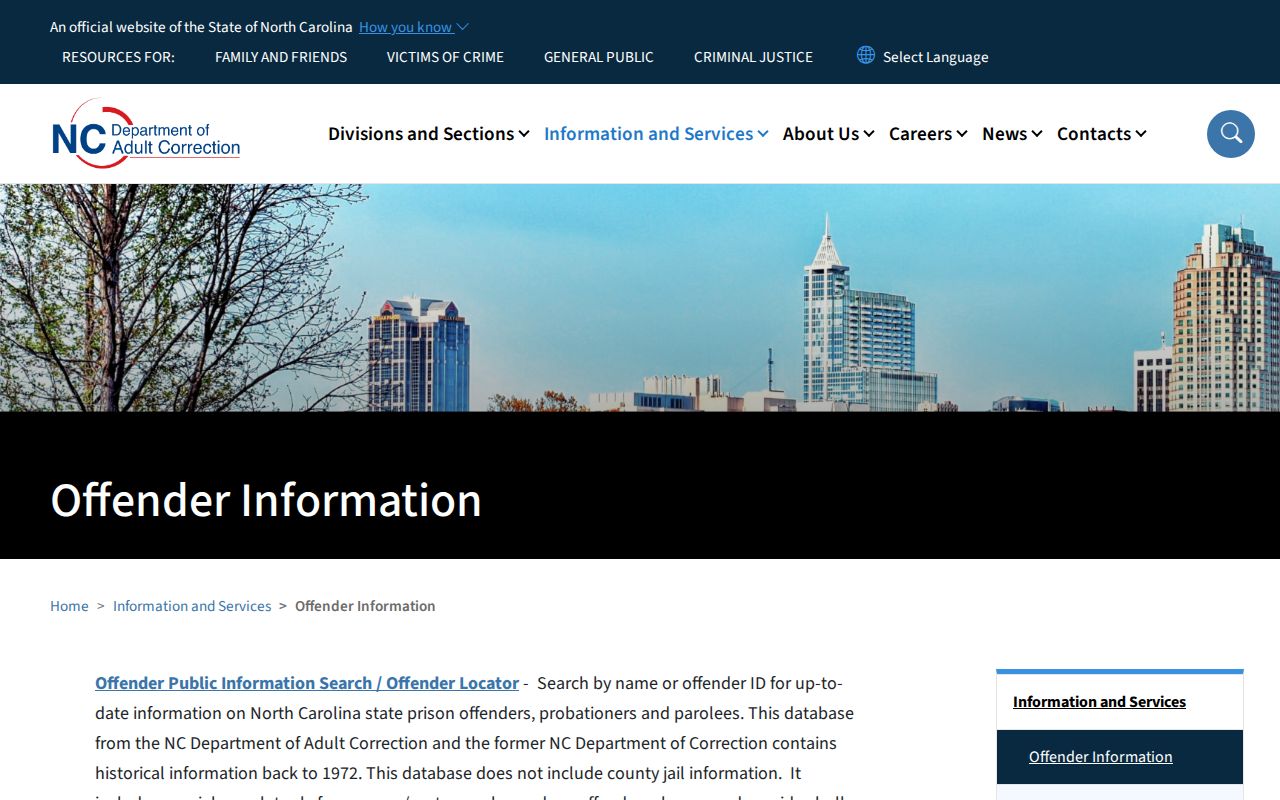
Check the full name, identifier, status, and date before associating a state result with a Cumberland address.
The North Carolina Sex Offender Registry has its own official search route.
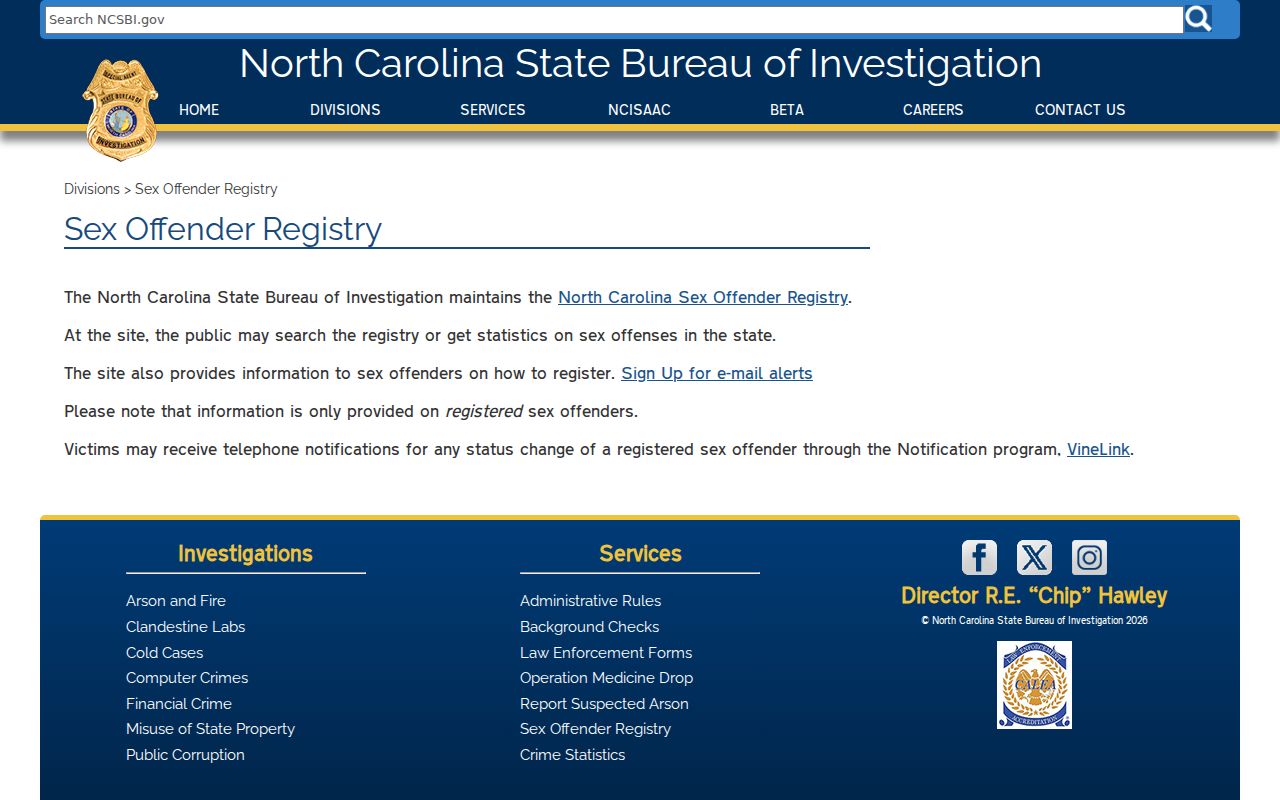
Registry information concerns registered people only and cannot substitute for a complete criminal-history record.
Cumberland Address Changes
Fayetteville’s 1951 citywide renumbering and street-renaming event can make an old directory number appear wrong next to a later tax card. Recent changes create another dual-name issue: records from before January 2026 can use Plantation Avenue or Chattel Street, while current municipal systems use Garden Avenue and Reflection Street. Search both names, keep the record date with its wording, and compare the old street guide or Sanborn map before deciding two records concern different places.
ZIP labels are not legal city limits. Cumberland GIS returns both Fayetteville and Eastover labels for ZIP 28312, and uses Fort Bragg for 28307 and Pope Army Airfield for 28308. Treat the raw GIS label as a research fact, then verify the postal delivery name and municipality separately.
Cumberland Offline Research Routes
Use the channel that holds the record when the portal falls short. The Register of Deeds accepts mail and counter copy requests. Tax Administration can answer detailed listing questions. The Clerk handles official court copies. Cumberland County’s NextRequest portal is the online starting point for a focused county public-records request. Name the office, record type, date range, address or parcel, and preferred delivery format. Ask for a cost estimate when appropriate.
For older material, move from library catalog and local-history staff to DigitalNC, the Register or Clerk, State Archives, and a focused request. The North Carolina Public Records Act, Chapter 132, supplies the public-access baseline but preserves record-specific exceptions. The reviewed county material does not establish one numeric response deadline for every Cumberland request.
The physical alternatives matter when a modern search cannot show enough detail. The Register of Deeds can provide a recorded-image or certified-copy path. The courthouse may be necessary for a case that is restricted, oversized, or not displayed in eCourts. Headquarters Library staff can retrieve a book or microfilm reel for a focused directory, newspaper, or map question. State Archives holdings help with county material that predates statewide vital coverage or web indexing. Those routes have different request limits, so carry forward the exact date, spelling, parcel, or directory year that gave the original lead.
Cumberland Research Limits
A person can be a property owner, deed party, voter, court party, or directory householder without proving current residence or a relationship to someone else. Protected voter addresses, confidential court files, sensitive vital-record fields, and Address Confidentiality Program information should remain protected. Use the narrowest source that can answer the question and stop once the purpose is met.